


Iguana Infestations in South Florida: The Hidden Damage Beneath Your Property
A problem you don’t see—until it’s already serious
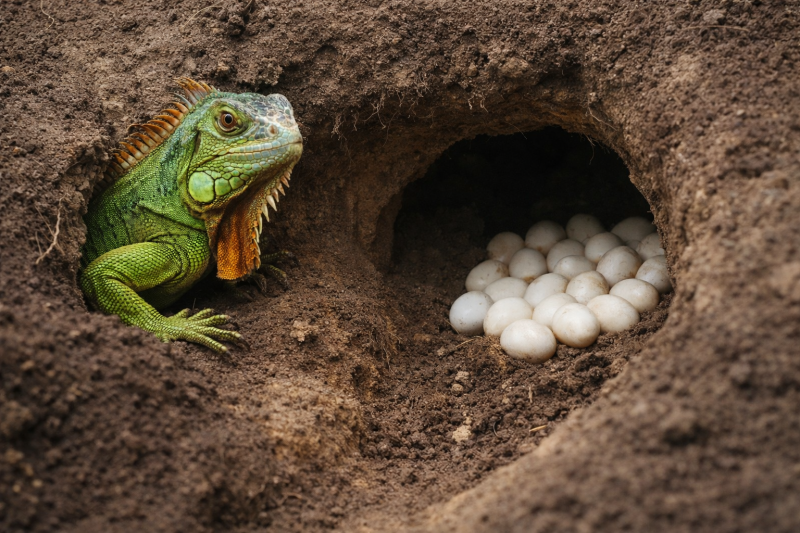
Iguanas are often dismissed as a nuisance—sunbathing on seawalls, moving through landscaping, or eating plants. What most property owners don’t realize is that the visible animals are only a small part of the problem. The real damage is underground, where iguanas build extensive burrow systems that compromise soil stability and can lead to structural issues over time.
By the time cracks appear in hardscapes or the ground begins to feel unstable, the underlying damage is often already advanced.
The primary threat iguanas pose is not above ground—it’s what they do beneath it.
Iguanas are burrowing reptiles. They dig tunnels to create nesting sites and shelter, often choosing locations with easy soil access and nearby water sources. In residential and waterfront areas, this frequently means:
Seawalls and canal banks
Retaining walls
Foundations and slab edges
Pool decks and patios
Sidewalks and driveways
A single burrow can extend 4 to 8 feet deep and run 10 to 25 feet horizontally, depending on soil conditions. In sandy Florida soil, these tunnels are easier to expand and often become part of larger, interconnected systems.
As these tunnels grow, they remove compacted soil that supports the surface above. This creates voids beneath the ground, weakening everything resting on top of it.
The result is not immediate—but it is predictable.
Over time, property owners may begin to notice:
Sinking or uneven ground
Cracks forming in concrete or pavers
Soil erosion along seawalls or banks
Sudden collapses in previously stable areas
In waterfront properties especially, burrowing can accelerate erosion and undermining of seawalls, which can become a much larger and more expensive issue if left unaddressed.
Why infestations escalate quickly:
One of the most overlooked aspects of iguana activity is how quickly a small presence can turn into a large population.
Female iguanas dig burrows specifically for nesting. Each nesting cycle can produce 20 to 70 eggs, typically laid underground in protected tunnel systems. In warm climates like South Florida, conditions are ideal for survival and growth.
Because these nests are hidden, reproduction often goes unnoticed. By the time multiple iguanas are being seen regularly on a property, there may already be numerous burrows and multiple generations developing underground.
This is how isolated sightings turn into infestations.
The compounding effect of burrow systems
Unlike a single hole in the ground, iguana burrows tend to expand over time and can become interconnected. What starts as one tunnel can develop into a network beneath a yard, seawall, or landscaped area.
As more iguanas use the same space:
Existing tunnels widen
New tunnels branch off
Soil becomes increasingly unstable
This creates a compounding effect where damage accelerates. The longer the burrow system exists, the more extensive and difficult it becomes to fully address.
Surface signs that indicate deeper problems
In many cases, the earliest warning signs are subtle:
Small holes near structures or along banks
Loose or disturbed soil
Repeated iguana sightings in the same area
Sections of lawn that feel softer than surrounding ground
These signs are easy to overlook. However, they often indicate active burrowing beneath the surface.
By the time visible structural symptoms appear—such as cracking or sinking—the issue has typically been developing for some time.
Why early action matters
Addressing iguana activity early is not just about removing animals—it’s about preventing the expansion of underground damage.
Once burrow systems are established:
They continue to grow
They attract additional iguanas
They increase the risk of structural instability
Early intervention limits the extent of excavation, stabilization, and repair that may be needed later.
Understanding the real risk
Iguanas are not aggressive toward people in most cases, but their impact on property can be significant. The combination of:
Deep and extensive burrowing
Rapid reproduction
Preference for structural edges and waterfront areas
makes them a unique and often underestimated threat to residential properties in South Florida.
What appears to be a simple wildlife issue can develop into a ground stability and infrastructure problem if left unmanaged.
Final perspective:
An iguana on a seawall or in a yard may not seem urgent. But when that presence includes active burrowing and reproduction, the situation changes quickly.
The visible animal is only part of the story.
The real concern is what’s happening below the surface—out of sight, expanding, and weakening the ground that supports your property.
Understanding that difference is what separates a minor nuisance from a developing problem.

If you live in Southwest Florida, you may have seen them lurking near canals, backyards, or even around your home—monitor lizards. While they might look fascinating, these invasive species can cause serious damage to your property and the surrounding environment.
As environmental specialists, we’ve seen firsthand how destructive monitor lizards can be. They burrow under foundations, seawalls, and patios, weakening structures and creating costly safety hazards. They also prey on native wildlife, disrupting the natural balance of our local ecosystem.
The good news? There are safe, effective, and humane solutions.
Our team specializes in the humane removal of invasive monitor lizards from residential and commercial properties. We carefully assess the situation, remove the animal without harm, and ensure it is handled according to local wildlife regulations.
But removal is only part of the solution.
After the lizard is gone, we repair the damage they leave behind—filling burrows, stabilizing soil, restoring affected structures, and reinforcing vulnerable areas around your home. More importantly, we implement preventative measures to keep them from coming back. This includes habitat modification, exclusion techniques, and strategic property adjustments that make your space far less attractive to invasive wildlife.
Protecting your home also means protecting Florida’s native environment.
If you’ve noticed signs of burrowing, structural damage, or increased lizard activity around your property, don’t ignore it. Early intervention can save you thousands in repairs and help preserve the ecosystem we all depend on.
Reach out today to learn how we can help you reclaim your property—safely, responsibly, and effectively.